Greyhound Welfare and Safety at Nottingham: Injury Data, Rehoming and Industry Standards
 Available in US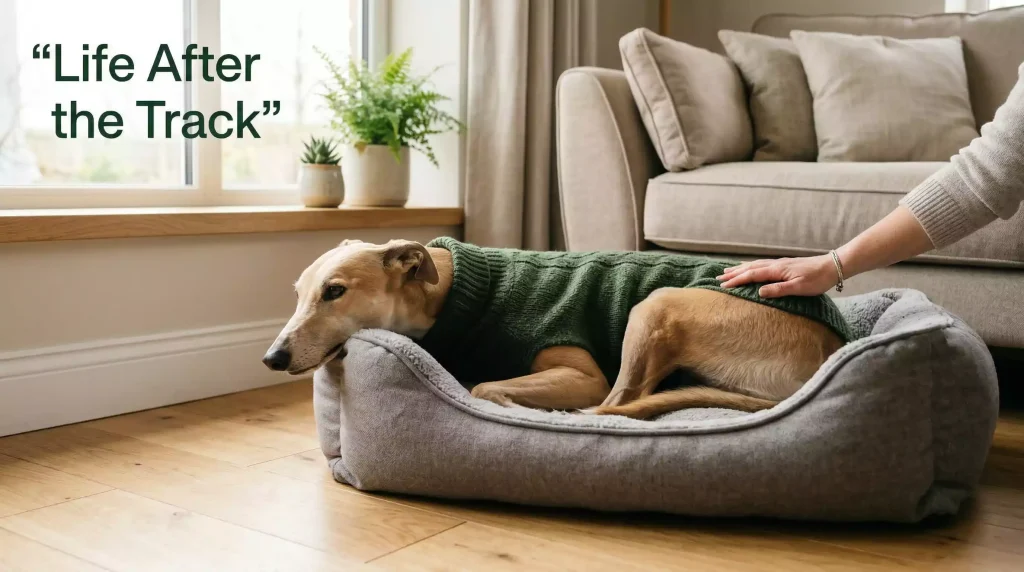
Best Greyhound Betting Sites – Bet on Greyhounds in 2026
Available in USWhy Welfare Data Matters for Every Racegoer and Punter
Greyhound welfare is not an abstraction debated only in parliamentary committees and animal rights campaigns. It is a measurable, data-driven reality that affects every race run at Nottingham’s Colwick Park. Every meeting operates under the regulatory framework of the Greyhound Board of Great Britain. Every injury is recorded. Every retirement is tracked. Every death on track is counted and published in annual reports that anyone can read.
That transparency is relatively new. Before 2018, the UK greyhound industry did not publish comprehensive welfare data. The absence of numbers allowed both sides of the welfare debate — industry defenders and abolitionists — to argue from anecdote rather than evidence. Since 2018, GBGB has released annual injury and retirement data that provides a factual foundation for the conversation. The numbers do not settle the moral argument about whether greyhound racing should exist. But they do answer specific, testable questions: how often do dogs get hurt, how many die, what happens to them after racing, and are things getting better or worse?
This article examines the welfare picture as it stands in 2026, drawing primarily on GBGB’s 2026 data release and the regulatory developments in Wales and Scotland. The aim is to present the numbers behind the welfare debate — not to tell you what to think, but to give you the evidence to think clearly about what happens to the dogs that race at Nottingham and across the UK.
The full picture is in our Nottingham greyhound results hub.
Injury Rates on UK Tracks: The 2026 GBGB Data
The GBGB Injury and Retirement Data 2026 is the most comprehensive annual welfare report in British greyhound racing. Published in 2026, it covers every licensed track in Great Britain — including Nottingham — and provides granular data on injuries, fatalities and retirements across the full calendar year.
The Headline Figures
In 2026, the injury rate across all GBGB-licensed tracks fell to 1.07% — the lowest figure since recording began in 2018. That means 3,809 injuries were recorded from 355,682 individual greyhound runs across 21 licensed stadiums. To express it differently: for every 100 times a greyhound entered a trap and raced, approximately one resulted in a recorded injury.
The fatality rate fell even further. In 2026, 123 greyhounds died on track, representing 0.03% of all runs. That figure has halved since 2020, when the fatality rate was 0.06%. Every death is one too many in any reasonable ethical framework, but the trend is unambiguously downward, and the rate is now at a level that represents a significant improvement over the sport’s recent history.
“There is much to be pleased and encouraged by in this year’s data,” said Mark Bird, Chief Executive of GBGB. “It shows that the initiatives we have introduced in recent years are now embedded and are helping to consolidate the significant progress we have made since 2018 across all measures.”
Injury Categories
Not all injuries are equal, and the GBGB data breaks them down by type. The most common category in 2026 was hind limb muscle injuries, with 1,013 cases — accounting for 0.28% of all runs. Hock injuries followed at 718 cases (0.20%), and wrist injuries at 566 cases (0.16%). These three categories together make up the bulk of recorded greyhound injuries on UK tracks.
The concentration of injuries in the hind limbs is consistent with what veterinary science would predict. Greyhounds generate explosive speed from their hindquarters, and the forces involved — particularly through bends, where centrifugal force pulls the body outward while the legs push inward — place enormous strain on muscles, tendons and joints. At Nottingham, where the 437-metre circumference means tighter bends than some larger UK tracks, the biomechanical demands on the hind limbs are persistent.
Cumulative Data: 2017 to 2026
For a longer-term perspective, GREY2K USA, an advocacy organisation critical of the industry, has compiled GBGB data from 2017 to 2026. Their figures show 35,168 injuries and 1,353 deaths on UK tracks over that period, along with 3,278 additional euthanasia cases. These cumulative numbers provide context for the annual improvements: the trajectory is positive, but the absolute volumes remain substantial.
Critics argue that even the improved 2026 figures represent an unacceptable level of harm. Defenders counter that the rates compare favourably with other animal sports and that the trend demonstrates genuine progress. Both positions have merit, and the data supports informed debate rather than one-sided conclusions.
Rehoming and Retirement: Where Greyhounds Go After Racing
What happens to a greyhound when it stops racing is, for many people, the most important welfare question of all. The industry’s answer has changed dramatically over the past decade, and the data reflects a transformation that would have been hard to predict ten years ago.
The Rehoming Rate
In 2026, 94% of retired racing greyhounds were successfully rehomed — placed in domestic homes, returned to their breeders, or transferred to adoption organisations. That figure stood at 88% in 2018 when GBGB began publishing comprehensive data. A six-percentage-point improvement may not sound dramatic in isolation, but applied to thousands of dogs per year, it represents hundreds of additional greyhounds finding homes rather than facing uncertain futures.
The remaining 6% includes dogs that died of natural causes during or after their racing careers, dogs euthanised for medical reasons (typically severe injuries), and a very small number of other outcomes. GBGB tracks each category separately, which allows scrutiny of where the remaining gaps exist.
The Economic Euthanasia Story
Perhaps the most striking figure in the entire GBGB dataset is the decline in economic euthanasia — dogs put to sleep not because of injury or illness, but because the cost of keeping them was deemed too high. In 2018, 175 greyhounds were euthanised for economic reasons. In 2026, that number was three.
“As a Board, we have been clear that putting a greyhound to sleep for economic reasons is unacceptable and I am pleased that we have reduced this by 98% since 2018,” Mark Bird stated. A 98% reduction is not incremental progress. It is the near-elimination of a practice that had been one of the most damaging aspects of the industry’s reputation.
The reduction was driven by a combination of regulatory pressure — GBGB made clear that economic euthanasia would result in disciplinary action — and the expansion of rehoming capacity through the Greyhound Trust and other adoption organisations. It also reflects a cultural shift within the industry, where trainers and owners are now more likely to take responsibility for their dogs’ post-racing futures than at any previous point.
The Injury Retirement Scheme
The GBGB Injury Retirement Scheme, or IRS, provides financial support for greyhounds that suffer injuries during or related to their racing careers. Since the scheme launched in 2018, it has paid out more than £1.1 million toward veterinary treatment for registered greyhounds. The scheme covers costs that might otherwise fall on trainers or owners, removing a financial incentive to euthanise an injured dog rather than treating it.
The IRS is funded through the industry’s welfare budget, which itself comes from the BGRF levy and GBGB’s operational income. It is not unlimited — the scheme has eligibility criteria and maximum payouts per case — but it fills a critical gap in the safety net. For dogs at Nottingham and other tracks, the existence of the IRS means that a race-ending injury is not automatically a life-ending one.
The Greyhound Trust and Adoption Organisations
The Greyhound Trust is the largest rehoming organisation in UK greyhound racing, operating through a network of local branches that assess, foster and place retired racing dogs in domestic homes. It is not the only organisation doing this work — smaller independent rescues, breed-specific charities and trainer-run rehoming operations all contribute to the 94% rehoming rate — but the Trust is the most visible and the most closely connected to the GBGB framework.
“The number of racing greyhounds who never have the opportunity to experience a loving home when their racing career is over is unacceptable,” Lisa Morris-Tomkins, Chief Executive of the Greyhound Trust, has said. The statement reflects a position that even within the rehoming community, 94% is seen as progress but not a destination. The target, implicitly, is 100% — a figure that may be asymptotically impossible given natural deaths and medical euthanasia, but that serves as the moral standard against which the industry measures itself.
Training, Regulation and Track Standards
The welfare data does not materialise from nowhere. It is the product of a regulatory system that governs every licensed greyhound track in Great Britain, from the surface maintenance standards to the veterinary requirements at each meeting.
GBGB’s Regulatory Role
The Greyhound Board of Great Britain licenses tracks, registers dogs and trainers, sets racing rules and enforces welfare standards. Every track that holds a GBGB licence — including Nottingham — must comply with a set of requirements covering kennel conditions, surface quality, veterinary provision and injury reporting. Tracks that fail to meet these standards face sanctions, up to and including the loss of their licence.
At Nottingham, this means that every race meeting has a licensed veterinarian present. Every injury is examined, recorded and reported to GBGB. Every dog that enters the traps has been weighed, its identity verified through its ear markings, and its fitness to race confirmed. These are not voluntary best practices — they are mandatory conditions of the track’s operating licence.
Continuing Professional Development
In 2026, GBGB delivered more than 580 hours of free Continuing Professional Development to industry participants — trainers, kennel hands, racing officials and track managers. The CPD programme covers welfare protocols, first-aid procedures, kennel management and regulatory updates. It represents a systematic attempt to raise the baseline competence of everyone involved in the day-to-day care and racing of greyhounds.
The significance of 580 hours in a single year is that it signals an industry trying to professionalise from within. Greyhound training has historically been a craft passed down through families and local kennels, with variable standards. The CPD programme does not replace experience, but it sets a common floor of knowledge that every licensed participant is expected to reach.
Track Surface Standards
Track surface quality is one of the most direct determinants of injury risk. Poorly maintained surfaces — too hard, too soft, uneven, or improperly graded — contribute to the biomechanical forces that cause muscle and joint injuries. GBGB requires tracks to maintain their surfaces according to standards set by the Sports Turf Research Institute, or STRI, which conducts periodic inspections and provides technical guidance.
At Nottingham, the Worksop Grey sand surface is graded and maintained between meetings by dedicated groundstaff. Watering is managed to ensure consistent going across the racing surface, and the track’s drainage system prevents waterlogging that could create dangerous racing conditions. These are operational details that racegoers rarely notice, but they directly influence both the racing product and the safety record.
Veterinary Presence and Post-Race Checks
Beyond the mandatory veterinary attendance at race meetings, GBGB’s welfare strategy includes requirements for post-race health checks and a reporting framework that flags patterns of injury at specific tracks or distances. If a particular track shows an elevated injury rate over a sustained period, GBGB can mandate surface inspections, modify race conditions or, in extreme cases, suspend racing until the issue is resolved.
This feedback loop between data collection and operational response is what makes the annual GBGB report more than a statistical exercise. The numbers drive action. When the data showed that certain injury types were concentrated at specific points in the racing calendar — for example, after long spells of dry weather when surfaces harden — the response was to tighten watering protocols and increase surface testing frequency. The declining injury rate since 2018 is partly a product of this data-led approach.
The national figures are in the GBGB injury report.
The Regulatory Horizon: Wales Ban, Scotland Bill and the Centenary
While the industry focuses on improving its welfare metrics, the political landscape is shifting in ways that could reshape greyhound racing’s future in the United Kingdom. Two legislative developments — one in Wales, one in Scotland — represent the most significant regulatory challenge the sport has faced in decades.
The Wales Ban
In September 2026, the Prohibition of Greyhound Racing (Wales) Bill was introduced in the Senedd. It passed with 36 of 50 members voting in favour. The bill prohibits licensed greyhound racing in Wales, with the ban scheduled to take effect no earlier than 1 April 2027 and no later than 1 April 2030.
Wales has only one licensed greyhound stadium — Valley in Ystrad Mynach — so the immediate practical impact is limited to a single venue. But the symbolic weight is enormous. Wales is the first home nation to legislate a ban on greyhound racing, and the precedent it sets could embolden similar efforts elsewhere.
“This bill shows we are a progressive nation committed to ethical standards, animal welfare and forward thinking legislation,” Huw Irranca-Davies, Deputy First Minister of Wales, said when the bill was announced. The language — “progressive nation,” “ethical standards” — frames the ban as a moral advance rather than a regulatory adjustment, which makes it harder for the industry to counter on purely economic or sporting grounds.
The Scotland Bill
Scotland followed a parallel track. The Greyhound Racing (Offences) (Scotland) Bill, introduced by Green MSP Mark Ruskell on 23 April 2026, passed Stage 1 in the Scottish Parliament on 29 January 2026 with government backing.
“I am delighted that the government is backing my bill,” Ruskell said. “This is a big step towards ensuring that we protect our greyhounds and halt this cruel gambling-led sport for good.”
The Scotland Bill is notable for its scope. It would make it an offence to hold, promote or permit greyhound racing in Scotland — broader than a simple licensing prohibition. There are currently no licensed greyhound stadiums in Scotland, so the bill’s immediate practical effect is to prevent any future stadium from opening. But like the Wales bill, its significance is primarily as a political signal. If two of the four home nations legislate against greyhound racing, the pressure on the UK government and the Senedd to consider England’s position becomes harder to ignore.
The Industry’s Response
GBGB and the BGRF have responded to the legislative threat with a combination of data transparency — the annual welfare reports — and public advocacy. The argument is that the improving welfare data demonstrates the industry’s capacity for self-reform, making legislative prohibition unnecessary. The declining injury rate, the 98% reduction in economic euthanasia and the 94% rehoming rate are all cited as evidence that the sport is on a positive trajectory.
Whether that argument carries political weight depends on the jurisdiction. In Wales, it did not. In Scotland, the government chose to support the ban bill despite the improving data. In England, where the majority of the UK’s 18 licensed stadiums are located, the question remains open. The Gambling Commission regulates the betting side of the industry, but there is no standalone regulator for greyhound welfare with statutory powers — GBGB is a self-regulatory body, not a government agency. This regulatory gap is a vulnerability that campaigners have repeatedly highlighted.
The Centenary Context
The regulatory pressure arrives at a moment of historical significance. The year 2026 marks the centenary of greyhound racing in the UK, with the first official race held at Belle Vue Stadium in Manchester on 24 July 1926. GBGB has organised a programme of celebrations under the banner “100 Years on Track,” and tracks across the country — including Nottingham — are participating.
The juxtaposition is stark: the sport is celebrating a hundred years of existence while two home nations are legislating to end it within their borders. Whether the centenary becomes a platform for renewal or a valedictory moment depends on how the next few years of political and regulatory decisions play out.
What This Means for Nottingham and the Sport’s Future
The welfare debate is not happening in a vacuum. It intersects with economics, with regulation, and with the commercial viability of tracks like Nottingham. Understanding where the sport stands financially is essential for understanding where welfare fits in.
The Global Market
Greyhound racing is not a dying sport in global terms. The worldwide market was valued at approximately $2.1 billion in 2026, with a projected compound annual growth rate of 4.2% through to 2033, when it is expected to reach $2.8 billion. The UK, along with Australia, Ireland and the residual US market, remains one of the core territories driving that valuation.
Growth in the global market does not automatically translate into welfare improvement. But it does provide the economic foundation on which welfare investment depends. Prize money, track maintenance, veterinary provision, rehoming programmes and the IRS are all funded from the commercial revenues that greyhound racing generates. If those revenues shrink — because of stadium closures, legislative bans or declining betting turnover — the welfare infrastructure shrinks with them.
The Funding Equation
At the UK level, the tension between welfare ambition and commercial reality is constant. GBGB wants to reduce injury rates further, expand the IRS, fund more CPD training and improve track standards. All of this requires money. The BGRF — the industry’s primary funding mechanism — collected £6.75 million from bookmakers in 2026–25, a figure that the BGRF Chairman has described as a long way from the historical highs of £10 million to £20 million.
“Bookmakers fully understand the position we are in and are receptive to paying more to safeguard the sport, but equally they have had quite a year of it themselves in terms of taxation and restrictions,” Sir Philip Davies, GBGB Chairman, acknowledged in a March 2026 speech. The statement captures the bind: the industry needs more funding for welfare, the bookmakers are sympathetic but financially pressured, and the political appetite for a statutory levy — which would solve the funding gap — remains uncertain.
What It Means for Nottingham
Nottingham is an English track, so neither the Wales ban nor the Scotland bill directly affects its operations. But the indirect effects are real. If the political momentum toward prohibition gains ground in England — even at the level of increased regulation rather than an outright ban — tracks like Colwick Park will face higher compliance costs, tighter welfare requirements and potentially reduced prize money as funds are redirected to welfare programmes.
The countervailing force is that well-run tracks with strong welfare records are the industry’s best defence against prohibition. If Nottingham can demonstrate — through data, through practice, through transparent reporting — that greyhounds at Colwick Park are well cared for, that injury rates are declining, and that retired dogs find homes, then the argument for keeping the track open becomes substantially stronger than the argument for closing it.
“This year sees greyhound racing in the UK celebrate our centenary, marking 100 years since racing first took place at Belle Vue Greyhound Stadium in 1926,” Sir Philip Davies noted. Whether the sport reaches its bicentenary depends on how seriously the industry takes the welfare challenge — not just as a public relations exercise, but as a genuine, data-driven commitment to the animals at the centre of the enterprise. At Nottingham, the numbers behind the welfare debate are there for anyone willing to examine them. The question is whether they are enough.
