Premier Greyhound Racing: What PGR Means for Nottingham’s Results and Coverage
 Available in US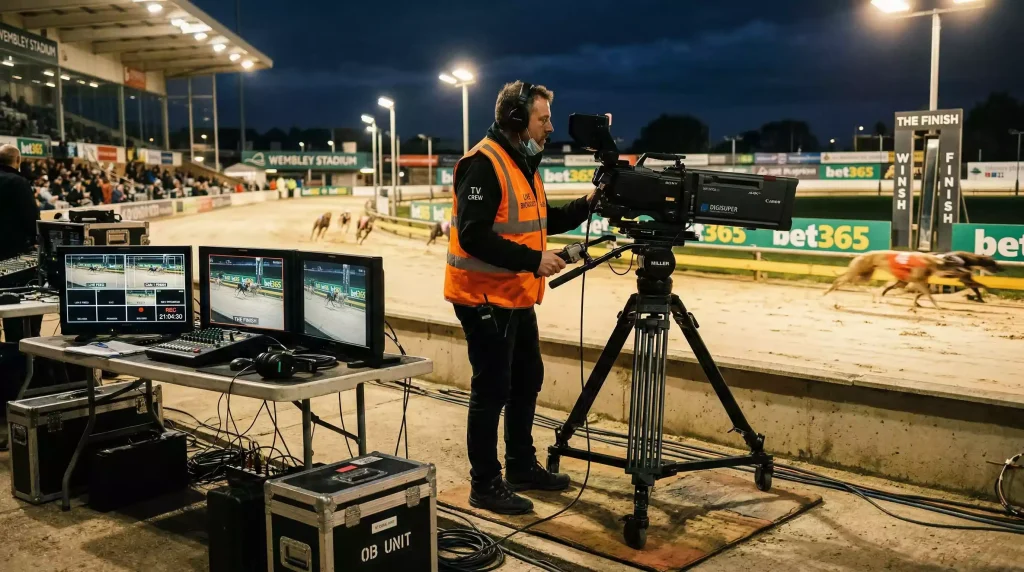
Best Greyhound Betting Sites – Bet on Greyhounds in 2026
Available in USPGR Represents 14 UK Tracks — Nottingham Among Them
Premier Greyhound Racing is the media brand that now shapes how Nottingham’s racing product reaches its audience, and understanding what PGR does — and does not do — is essential for anyone who follows results, form and data from Colwick Park. PGR is not a regulator, not a track operator and not a betting company. It is a media and distribution platform, launched in January 2026, through which Arena Racing Company represents 14 UK greyhound tracks to broadcasters, bookmakers and data consumers.
The distinction matters because PGR’s role is often misunderstood. PGR does not own Nottingham. ARC owns Nottingham. PGR does not set the grades, manage the trainers or maintain the track surface. What PGR does is package and distribute the racing content — the live pictures, the data feeds, the result services — that turns each meeting at Colwick Park into a product that millions of remote bettors can access. In an industry where the audience has moved decisively from the grandstand to the screen, the distribution layer is where the commercial value concentrates. The media backbone of modern greyhound racing runs through PGR, and Nottingham is one of its anchor venues.
The wider context is set out in our Nottingham greyhound results hub.
Which Tracks Are Under the PGR Umbrella
The PGR network encompasses 14 UK greyhound tracks as of 2026. Five of these are ARC-owned venues: Central Park (Swindon), Nottingham, Perry Barr (Birmingham), Newcastle and Sunderland. The remaining nine are partner tracks that have opted into the PGR distribution framework, giving ARC the rights to manage their media output alongside its own venues.
This structure creates a national network that covers the majority of GBGB-licensed racing in England. The Entain media rights deal that launched PGR was built on the premise that a coordinated network of tracks could deliver more value to broadcasters and bookmakers than a fragmented collection of independent venues. The scale of that coordination is visible in the PGR map: fourteen venues, producing racing almost every session of every day, distributed through a single media pipeline to Entain’s shop and digital network.
Not every GBGB-licensed track is part of PGR. Some operate under independent media agreements or through alternative distribution partners. The tracks outside the PGR umbrella still produce licensed racing and still appear on result services, but their broadcasting and data distribution follow different pathways. For bettors who focus on Nottingham, the practical significance is that every PGR track delivers its data in the same format, at the same speed and through the same channels. If you are comfortable navigating Nottingham’s results on a PGR-affiliated platform, you can navigate any PGR track’s results with equal ease. That consistency simplifies the workflow for anyone who analyses form across multiple venues, which is increasingly common among serious greyhound bettors.
How PGR Affects Betting Markets and Data Feeds
The most tangible impact of PGR on Nottingham bettors is the quality and consistency of the data pipeline. Before PGR, each track’s data reached bookmakers and form services through a variety of channels, with varying formats, varying delays and varying levels of detail. PGR standardised this. The result data, racecard information, sectional times and going reports from Colwick Park now flow through the same system as data from every other PGR venue, which means the information arrives faster, is formatted more consistently and is less prone to the errors that fragmented systems introduce.
For betting markets, PGR’s scheduling coordination has a direct effect. By avoiding direct clashes between its 14 tracks, PGR ensures that bookmakers can offer each meeting as a distinct product rather than competing with another greyhound card for the same audience at the same time. This benefits bettors because it keeps liquidity concentrated: the money being wagered on a Nottingham race is not being split with a simultaneous race at another PGR venue, which means the market is deeper, the prices are more efficient and the forecast and tricast pools are larger.
The scale of the betting activity that PGR supports is considerable. Bookmaker shop turnover on greyhound racing reached £794 million in the 2023-24 period, and PGR’s tracks generate a significant share of the content that drives that turnover. The media fees that flow back from Entain to the tracks — via PGR’s distribution agreements — are directly linked to the volume of betting that each venue’s content generates. A well-attended Nottingham evening meeting that attracts heavy betting activity produces more media revenue than a quiet morning card, which creates a commercial incentive for the track to programme its strongest fields on its highest-profile sessions.
For data-driven bettors, PGR’s standardisation is arguably the most important structural change in UK greyhound racing in the past decade. The ability to pull consistent, comparable data from 14 tracks and analyse it within a single framework reduces the noise in cross-venue form study and makes national-level analysis practical in a way that was previously the preserve of professional operations.
PGR and the Future of Greyhound Media Rights
PGR is less than three years old, and its long-term trajectory will depend on whether the consolidation model continues to attract partner tracks and whether the Entain relationship remains the centrepiece of its commercial strategy. Several factors will shape that trajectory.
First, the number of tracks in the network may grow. Independent venues currently outside PGR face increasing pressure to join a distribution platform that can deliver the broadcast reach and media revenue that the modern betting market demands. A track that distributes its own content independently is competing for bookmaker attention against a 14-venue network with an established pipeline. The economics favour joining rather than standing alone, which suggests PGR’s membership may expand over time.
Second, the evolution of streaming technology and data delivery will shape what PGR can offer. As broadband speeds increase and mobile streaming improves, the demand for higher-quality, lower-latency greyhound coverage will grow. PGR’s ability to invest in production quality across its network — consistent camera angles, real-time graphical overlays, integrated form data on screen — will determine whether the product can attract and retain a younger, digitally native audience that has grown up with high-production sports broadcasting.
Third, the regulatory environment matters. The Wales and Scotland bills, while not directly affecting PGR’s operations, create uncertainty about the long-term political viability of greyhound racing in parts of the UK. If the regulatory landscape becomes more restrictive, PGR’s value as a unified voice for the commercial interests of its member tracks increases. A fragmented industry cannot advocate for itself effectively. A consolidated media platform, representing 14 venues and their combined economic output, is a more credible interlocutor with government and regulators.
For Nottingham, PGR’s future is Colwick Park’s future. The track’s ability to attract investment, sustain its racing programme and reach its audience is now inextricably linked to the media infrastructure that PGR provides. The operator behind the track is ARC. The media brand behind the product is PGR. And together, they define what it means to be a greyhound track in the UK in 2026. For bettors, the practical implication is simple: PGR is not going away, and the data and broadcast standards it sets will continue to shape how you access, analyse and act on Nottingham’s racing product for the foreseeable future. Learning to work within that framework — rather than around it — is the smartest adaptation available.
Where to watch it is in live streams.
