100 Years of Greyhound Racing in the UK: The Sport’s Centenary in 2026
 Available in US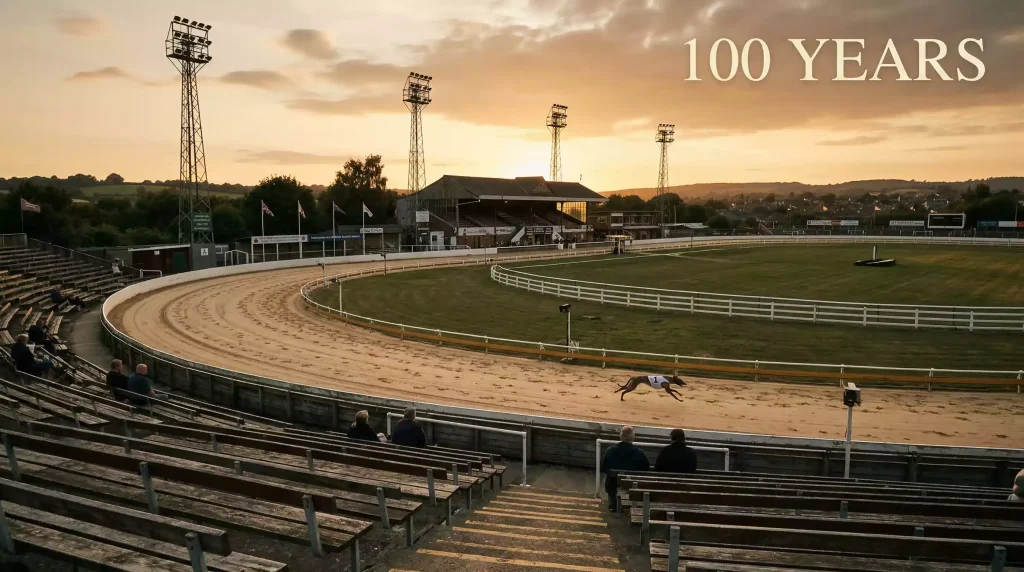
Best Greyhound Betting Sites – Bet on Greyhounds in 2026
Available in USOn 24 July 1926, a Greyhound Named Mistley Changed British Sport
The greyhound racing centenary in 2026 marks one hundred years since a dog called Mistley chased a mechanical hare around a purpose-built track at Belle Vue Stadium in Manchester and crossed the finish line in 25.00 seconds over 440 yards. It was 24 July 1926, a Saturday afternoon, and the spectators who watched that race had no way of knowing they were witnessing the birth of a sport that would become, within a decade, one of the most popular mass entertainments in Britain.
A century later, the landscape has changed beyond anything those first spectators could have imagined. The dozens of stadiums that once packed in tens of thousands of fans on a weeknight have contracted to a network of 18 licensed venues. The on-course betting ring has been eclipsed by digital platforms. The dogs run faster, the data is deeper, and the regulatory framework is more sophisticated than at any point in the sport’s history. But the core proposition — six dogs, a trap, a hare and a finish line — remains unchanged.
This is the story of how greyhound racing grew, shrank and endured across a century in the UK — and what the centenary year means for venues like Nottingham that carry the sport forward into its second hundred years.
The wider context is set out in our Nottingham greyhound results hub.
The First Decades: Boom, Stadiums and Mass Popularity
The speed at which greyhound racing colonised British culture after that first Belle Vue meeting is one of the most remarkable stories in UK sporting history. Within three years of Mistley’s run, greyhound stadiums had been built in London, Birmingham, Glasgow, Edinburgh, Liverpool, Sheffield and dozens of other cities. By the early 1930s, annual attendance at licensed greyhound meetings exceeded 20 million. No other sport in Britain had grown so fast from a standing start.
The appeal was democratic. Greyhound racing required no membership, no dress code and no advance booking. A working man or woman could finish a shift, walk to the local stadium, and spend an evening watching fast, exciting sport while placing modest bets. The meetings were held in the evenings — horse racing was largely an afternoon affair — which meant the two sports did not compete for the same audience. The six-dog format produced quick, easy-to-follow races at regular intervals, typically every 15 minutes, which kept the entertainment moving and the betting turnover high.
The inter-war period was the golden age. Stadiums were built to civic standards, with grandstands, restaurants and car parks that reflected the enormous commercial confidence behind the venture. White City in London, Wimbledon, Walthamstow, Belle Vue, Hall Green in Birmingham — these were not rough-and-ready tracks on waste ground. They were purpose-built entertainment venues that invested heavily in facilities and promotion. The English Greyhound Derby, first run in 1927, established itself as the sport’s showpiece event within its first few years, and the prize money rose from £1,000 in that inaugural running to figures that would eventually reach six digits.
The post-war period saw continued strong attendance, but the seeds of decline were already present. Television was changing how people spent their evenings. Car ownership was making suburban entertainment options more accessible. And the betting landscape was about to shift permanently: the legalisation of off-course betting shops in 1961 meant punters no longer needed to attend the stadium to place a bet on the dogs. The stadiums were still full — but the economic logic that underpinned them was beginning to erode.
Decline and Consolidation: Fewer Tracks, More Races
The second half of greyhound racing’s first century is a story of relentless consolidation. Stadium after stadium closed — lost to redevelopment, rising land values, falling attendances and the inability of many independent operators to adapt to a world where the primary audience was betting remotely rather than watching in person. Wimbledon closed in 2017. Walthamstow in 2008. Hall Green in 2017. Oxford, Catford, Hackney, Swindon — the roll call of closures is long and spans every decade from the 1970s onward.
And yet the sport did not die. It consolidated. As of January 2026, 18 licensed stadiums remained operational across the UK, and the number of races being staged had actually increased even as the number of venues contracted. The remaining tracks — including Nottingham, which opened in 1980, well into the consolidation era — absorbed the racing product from closed venues, ran more meetings per week and produced more individual races per card. The sport shrank in footprint but intensified in output.
The economics shifted decisively toward media rights and betting revenue. Where a 1950s stadium relied on gate receipts and on-course tote turnover, a 2020s stadium relies on broadcasting fees, data licensing and the share of off-course betting that filters back to the sport through voluntary bookmaker levies. The product is the same — dogs racing around a sand track — but the commercial model is unrecognisable.
Nottingham’s own trajectory mirrors this pattern precisely. A stadium built in the era of live attendance, converted into a media production hub under ARC and Entain, surviving because it adapted to each successive shift in the industry’s economic structure. The tracks that did not adapt are now housing estates and retail parks. The ones that did, including Colwick Park, are still racing.
Nottingham’s own timeline is in the stadium history.
The Centenary Programme and GBGB Celebrations
The Greyhound Board of Great Britain has designated 2026 as its centenary year under the banner “100 Years on Track”, and the programme of events and initiatives is designed to celebrate the sport’s history while making the case for its future. GBGB Chairman Sir Philip Davies framed the occasion as an opportunity to “celebrate our centenary” while acknowledging the challenges and opportunities that lie ahead for the next generation of the sport.
The centenary programme includes commemorative events at licensed tracks, historical retrospectives and promotional campaigns aimed at introducing greyhound racing to new audiences. For venues like Nottingham, the centenary provides a marketing platform and a narrative hook: Colwick Park may only be forty-six years old, but it is part of a sporting tradition that stretches back a full century. The stadium’s ability to host the English Greyhound Derby in 2019 and 2020 — the sport’s most prestigious event — demonstrated that it belongs at the top table of UK greyhound venues, even if it is not one of the original sites.
The centenary also arrives at a moment of genuine uncertainty for the sport. The Prohibition of Greyhound Racing (Wales) Bill and the Greyhound Racing (Offences) (Scotland) Bill represent the most significant regulatory challenges in the sport’s modern history. While neither directly affects Nottingham or the English tracks, they reshape the political landscape in which the sport operates. The centenary celebrations exist alongside those legislative headwinds, which gives the anniversary a bittersweet quality — a celebration of endurance conducted in the awareness that endurance is not guaranteed.
For the sport’s supporters, 2026 is a year to look backward and forward simultaneously. Backward to Mistley at Belle Vue, to the packed stadiums of the 1930s, to the legends who ran at tracks across the country. Forward to a sport that is smaller, more regulated and more data-driven than its founders could have imagined — but that still sends six dogs out of the traps every 15 minutes, four nights a week, at Colwick Park. A century at the track, and the hare is still running.
