
Greyhound Injury Data in the UK: What GBGB’s 2026 Report Reveals
 Available in US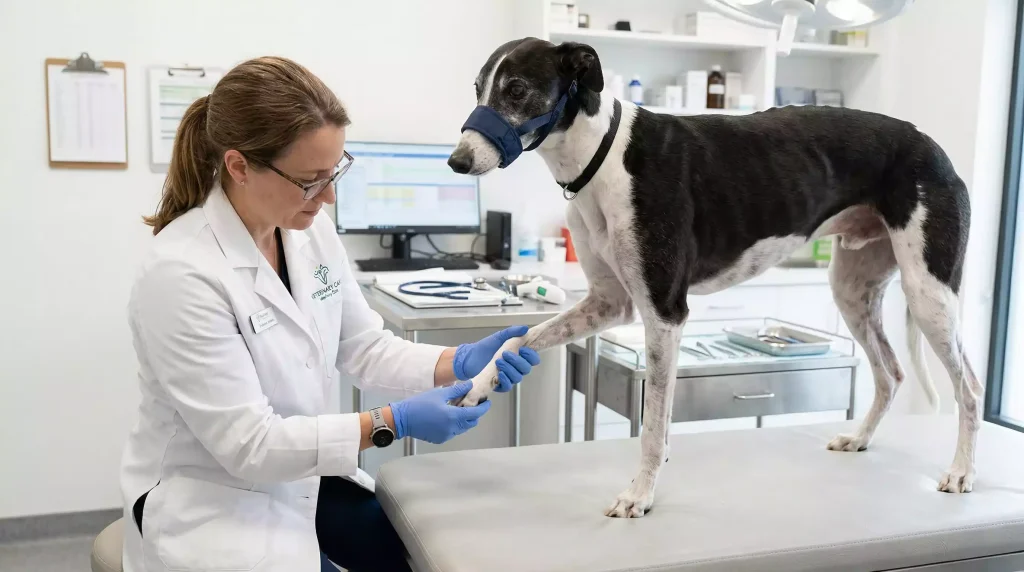
Best Greyhound Betting Sites – Bet on Greyhounds in 2026
Available in USGBGB Has Published Injury Data Annually Since 2018
The Greyhound Board of Great Britain has published comprehensive injury and retirement data every year since 2018, and the 2026 report represents the most detailed picture yet of safety outcomes across licensed UK greyhound racing. Reading the safety record means engaging with the numbers directly — not with the headlines that advocates on either side of the welfare debate choose to highlight, but with the underlying data that tells a more nuanced story.
The GBGB Injury and Retirement Data 2026 covers every run on every GBGB-licensed track during the calendar year, including Nottingham. It records injuries by type, severity and outcome, tracks fatality rates, and documents what happens to greyhounds when they retire from racing. For anyone who wants to understand the welfare profile of the sport — whether as a bettor, a potential adopter or a concerned member of the public — this report is the primary source.
The wider context is set out in our Nottingham greyhound results hub.
Headline Numbers: Injury Rate, Fatality Rate and Trends
The headline figure from the 2026 data is the overall injury rate: 1.07 percent. That means 3,809 injuries were recorded from 355,682 individual greyhound runs across 21 GBGB-licensed tracks. The 1.07 percent figure is a record low — the lowest injury rate since GBGB began publishing the data in 2018, and a continuation of a downward trend that has been consistent across every year of reporting.
To put that number in context: for every 100 races a greyhound runs, the probability of sustaining any injury — from a minor muscle strain to a serious fracture — is approximately one. The vast majority of those injuries are at the lower end of the severity scale. A pulled muscle, a bruised pad, a minor strain that keeps the dog out of racing for a week or two. Serious injuries — fractures, dislocations, injuries requiring surgery — represent a subset of the total figure.
The fatality rate in 2026 was 0.03 percent: 123 fatalities from 355,682 runs. This figure has halved since 2020, when the rate stood at 0.06 percent. Every fatality is a tragedy — for the dog, for the trainer, for the owner — and the industry has been clear that its goal is to drive this number as close to zero as the inherent risks of the sport permit. The halving of the fatality rate in four years represents genuine progress, though critics argue that any non-zero rate is unacceptable in a commercial sporting context.
The trend lines are unambiguously positive. Injury rates have fallen in every year since tracking began. Fatality rates have fallen in every year since tracking began. Rehoming rates have risen. Economic euthanasia has been almost entirely eliminated. These are not static figures presented in isolation — they are a trajectory, and the trajectory is consistent.
Injury Categories: The Most Common Types
The 2026 data breaks injuries down by anatomical category, and the distribution tells a story about the physical demands of greyhound racing that anyone who studies form should understand.
The most common injury category is hind limb muscle injuries: 1,013 cases, representing 0.28 percent of all runs. The hind limbs generate the propulsive force that drives a greyhound forward — they are the engine of the sprint — and the repetitive high-intensity loading that racing demands makes these muscles the most vulnerable to strain. A hind limb muscle injury typically presents as a pulled or torn muscle in the hindquarters, and recovery times range from days for minor strains to weeks for more significant tears.
The second most common category is hock injuries: 718 cases, or 0.20 percent of runs. The hock is the joint in the greyhound’s rear leg that corresponds roughly to the human ankle, and it absorbs enormous forces during the acceleration and cornering phases of a race. Hock injuries range from mild sprains to more serious joint damage, and they can be career-threatening if they recur.
Third is wrist injuries: 566 cases, or 0.16 percent. The wrist — the joint in the front leg — bears the impact of landing during the gallop stride and is particularly stressed on bends, where the inside front leg must support the dog’s weight through a tight turn. Wrist injuries are more common at tracks with tighter bends and shorter circumferences, which is one reason why track geometry matters for welfare as well as for form analysis.
These three categories account for the majority of all recorded injuries. The remaining cases are distributed across other anatomical areas, including toe injuries, shoulder injuries and the relatively rare but more serious category of fractures. Understanding the injury profile has practical implications for form study: a dog returning from a hock injury may show hesitancy on bends, while a dog recovering from a hind limb strain may lack its usual closing speed.
What happens to retired dogs is in rehoming.
Methodology and Data Limitations
The GBGB data is collected from every licensed track by the on-course veterinary teams that attend each meeting. Every injury that is reported to the track veterinarian is recorded, categorised and included in the annual dataset. This methodology means the data captures injuries that are clinically identified and reported — it does not capture injuries that occur in training, during transport or at home, which fall outside the scope of track-based veterinary oversight.
This is the most significant limitation of the data. The injury rate of 1.07 percent refers specifically to injuries sustained during races on GBGB-licensed tracks. It does not represent the total injury burden on racing greyhounds, because it excludes the non-race environment. Some critics have argued that the track-only focus understates the true welfare cost of the sport. The GBGB’s position is that it publishes the data it can verify — the injuries recorded by qualified veterinarians at the point of occurrence — and that extending the scope beyond the track would introduce reporting inconsistencies that would undermine the data’s reliability.
The other limitation is definitional. What counts as an injury? A mild muscle soreness that resolves within 24 hours is recorded the same way as a fracture requiring surgery. The GBGB data does not weight injuries by severity in its headline figures, which means the 1.07 percent rate includes everything from the trivial to the serious. More granular breakdowns are available in the full data summary, which distinguishes between injury categories and outcomes, but the headline figure — the one most often cited in public debate — does not reflect that nuance. Reading the safety record properly means going beyond the headline and into the category-level detail where the real picture lives. For bettors, the practical value of this data is different from its welfare significance: understanding which injury types are most common and which body parts are most vulnerable helps interpret a dog’s form when it returns from an absence, and informs your assessment of whether a returning runner is likely to perform at its previous level.
